
Nerdanel's Story

Silmarillion based fanfiction.

My Photo
Name:
Location: United Kingdom

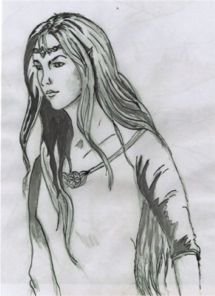
I am a history teacher taking a year out to pursue other interests and courses of post-graduate study. This blog contains my first attempts at writing fanfiction, or any form of fiction. It is very much a working document and subject to many re-edits.What I write is based on the wonderful works of J.R.R. Tolkien, (edited by C. Tolkien), and is purely for my own pleasure and relaxation. I certainly do not do this for profit of any kind. Some chapters are at present submited to ff.net and 'The Council of Elrond' sites, although Nerdanel's Story is undergoing a lot of re-writing at the moment. There are many ideas and some names that I have taken from the 'History of Middle-Earth' series, so some terminology may be unknown to those who have just read 'The Silmarillion'. I am not an expert on Professor Tolkien, Quenya, or on writing, so I will probably make lots of mistakes! But as I mentioned, I am doing this for fun, and happy to learn as I go from those whose writings and thoughtfulness I admire. The avatar is one of my own sketches of Nerdanel.

Thursday, May 10, 2007


Of Tyelkormo the Hunter.

And it is still chaos! My husband is working all hours, my father is desperate to get his life sorted out, my niece is on an emotional roller-coaster - and I am plodding on! Today we had one of those annoying EBay happenings. Someone bought some equipment from my husband, then immediately left neutral feedback saying they had binned it. Now he is cross becuse not only was the thing fine, and the buyer probably just dosent know how to use it, but if they had contacted us first he would have given an immediate and full refund upon said item's return. It makes me wonder who would just bin something that cost them £132 without asking the seller about it?

Well I am pleased I now know about the picture on the front of that Silmarillion book - many thanks. ;-D It is one other thing not to tax my mind. But really I want to start thinking about what I will be doing this coming academic year; if we can get niece and father sorted out, that is.
Looking for picture to add! Ahh ... another edition of The Silmarillion! I first saw this copy at Victoria train station - thought it was something to do with Star Trek from the picture (that would be the version of Star Trek by Tolkien, obviously, ;-)as his name and the book title are not exactly hidden!)- got on a train, then realised it was The Silmarillion - and I hadn't realised! Silly me, again! I never have managed to track down one of these.


Here is the first part of the re-written Tyelkormo. Much more to follow. Fëanor, if you are reading this, I have added more Tyelkormo as an adult, as you said he was rather absent in the original version. ;-)


Of Tyelkormo the Hunter. Part One.


(Disclaimer: I am writing in the world created by JRR Tolkien and using characters, scenarios and timelines created by him. I own nothing except the mistakes, and a few, easily identifiable, secondary characters. References are from The Silmarillion and HoME 1, 10 and 12)


“Many other words he (Celegorm) spoke, as potent as were long before in Tirion the words of his father that first inflamed the Noldor to rebellion.”

(Of Beren and Lúthien The SilmarillionJ.R.R. Tolkien. Ed C. Tolkien.)


Neldormindo. The First house of Curufinwë Fëanáro. Seventh Age


I mourned for all of my sons – for the loss of their lives; for the deeds they performed that fell far short of valorous. But a peculiar kind of sorrow and regret do I feel when I think upon Tyelkormo. Of all of my children is he the one I consider I failed most grievously. Mayhap Fëanáro was not the only parent to show favour? Mayhap, though not of my conscious choice, I also had my favourites? Though in the time of bliss I perceived it not, my championing of Maitimo must have irked my third son greatly. That, and other matters, gave cause for our relationship to be less than warm in the last days we were together in Tirion.

Yet when I look now upon the sculpting I made of him after he began pursuit of she who had ensnared his heart – I behold one of so much promise and noble authority. Another of my sons who was born to command, was he. Another with a presence about him like unto his sire. Although the nature and abilities my lord bequeathed to each of our sons was most varied and complex, I oft thought in simpler terms. Maitimo had much of Fëanáro’s indomitable spirit and charisma; Makalaurë had his extraordinary gifting – though in music and poetry, rather than works of hand; and Tyelkormo had his father’s physical prowess; his love of freedom to roam at will, to explore the unknown. Also, when he would, did Tyelkormo have his father’s passionate manner of speech, and hot temper.

And did not all three of our sons have something of their mother about them, to dispose them to wisdom! But of those three, in Tyelkormo it could be least obvious.

Now my mind is a riot of memories as I seek to capture and hold images of the hunter of renown – the friend of Oromë - who was my third son. But to begin my recollections of him I will make note of an incident that occurred after the time of Moringotho’s release – of something that happened in the time of lies and of deceit which was to mark unwelcome change in all our lives.


- - - - -


“What is this you do? You shall unhand my son, least you answer to me!”

My heart burnt within me; my face flushed to rosy hue with outrage at what I beheld. Anger and disbelief vied for precedence in my thoughts.

I had ridden as fast as I could through the oft-traveled flower meadow, to come to the aid of Ambarussa the elder. My sixth son lay prone upon the ground, beside a high, hawthorn hedge. His right arm was twisted beneath him at a most uncommon angle. That it was broken, I was certain.

My mount, my favoured dappled mare, Hísiel, I had urged on at speed, turning her in a half rearing halt before the four neri who surrounded the figure upon the grass. Unusual expressions they bore as they regarded my approach; those sorts of expressions I had noted but of late upon the faces of some few of our folk. Proud and confident, as with most of the Noldor - aye, but that other touch was upon them that I was still struggling to understand. Cruel - was that the word best suited? They held a look that said their nature was tainted by their enjoyment of other’s misfortune.

Now was their attention fully turned from my son to me, as if they doubted I could enforce my will where Ambarussa had failed. But he had they brought low by trickery, as I had observed from the brow of the hill I had been traversing on my path home. Those four neri had made a call for aid to my son, for help with a supposed fallen rider and horse at that hedge. Then, when he dismounted to see what was ado, had the one still mounted driven him into the hedge itself, the others throwing ropes upon him to entangle, bind, and pull him to the ground. So intent had they been on making secure their struggling captive that they had not noticed me in the distance. But I had noticed them! I noticed the large, jagged stone taken up to strike my son upon the head, the many kicks aimed at his torso that he moved arm to deflect. Servants of the Lord Poldórion were those of that group, from my recollections – that Lord who was one of Nolofinwë’s foremost supporters.

At my arrival, one of their number had been prodding the semi-conscious Ambarussa with his booted foot. Two others had been making ready to bind him tightly, broken arm and all. The remaining nér moved forward, inclining his head in a mocking gesture of giving of aid to a lady.

I wanted no aid! I wanted no insult to my intelligence! So very angry was I as I looked past his attempt to obstruct my view of my sixth son.

Ambarussa made little sound, save that of harsh drawn breath. His good hand moved to clutch at the grass, however, at the sound of my voice. A warning, mayhap, that I should see first to my own safety – ride swiftly to bring of help? Then I noticed the blood from the wound to his head running freely through his copper-brown hair, and pooling onto his cloak and the ground.

How dare they! How dare any Elda deliberately do such to another – to one of my sons!

No real concern had I prior to that event for my own or for my sons’ safety in Aman in regard to others of our kind. Although there had been increasing disagreements between our House and that of Nolofinwë those last twenty years, (there had been arguing in the Hall of Lore and in council, and even on the streets of the city. There had been over zealous competition in the arena that our sons’ friendships had cooled somewhat), never had there been such open use of deliberate physical violence. It was incomprehensible!

In no way could such an action have been ordered by anyone of honour; but for that group to initiate such a deed of their own choosing seemed unlikely. Nay, thought I, it is the result of some terrible mistake in understanding that need be explained. Those servants of the Lord Poldórion must have misconstrued their lord’s words of anger at my family.

Alas, I had not taken sufficient account of the subtle changes wrought not just upon expression of face, but also upon the hearts and minds of some of the Noldor.

“Princess Nerdanel! What a pleasant surprise to find you, also riding back to Tirion on this day.” The nér who made to block my access to my son took another step towards me, addressing me in a tone more sarcastic than I was wont to accept. “We had thought to take one, whereas now we are gifted two! But I think it is you who have the answering to do! Lady Istarnië; curuni trained - mother of the brood of arrogant would-be-rulers - you will not find us as easily swayed by your counsel as your husband. Soon will you be answering to our lord for your vain words and role in the troubles, rather than we to you.”

The audacity – the threat, the insult of the words to me fuelled my anger; but I would let none rob me of my wits.

For a short time had the rumour been put abroad in Tirion by those who knew us not well, that my relationship with Fëanáro was most unnatural – that to have any means of restraining one so powerful, so hot of temper as he, I must have had more artful instruction than usual from the Maia, Aratë. Some had said that I was using of mind skills to enchant my lord and turn him to my bidding – for still did some wonder at Fëanáro’s choice of me as wife.

If only they knew!

In truth Fëanáro would be mastered by none – certainly not by his lady! Never could I have spoken into his thoughts without him knowing, or without his permission. Never would I have so attempted! All I could ever do was to cast my net of love, lore and wisdom about his shoulders to aid him in restraining any excess fire of mood. The choice of thought and deed was always his.

Now the foremost of that small group of neri gestured that one of his accomplices move to take me captive. No weapons had I, for such were not carried in those days – save tools for the hunt. But no fainthearted coward was I either, to have freely given birth to so many! I was wife to Fëanáro, daughter of Urundil, and one strong of will in my own right. I would not run! Swiftly I slid from my horse’s back. The four neri smiled to each other at what they considered my folly in giving them no challenge at capture. But unbeknown to them, strapped to the saddle on the side of my mare that was hidden from their sight, was a short and sturdy oak staff – fashioned by Tuon for the use of Ambarussa the younger. Many a time in my childhood had I practiced with staff, thinking to emulate those of our athletes who impressed my father. Many of my father’s apprentices could I then have overcome if I had the mind so to do. With well-remembered fluidity of movement, I released the fastenings, drew forth the ‘weapon’ and struck out at my would-be assailant, knocking him clean to the ground.

At the sight of his collapse the remaining three started, and Ambarussa groaned louder as he fought to regain his full senses. Lashing out with his good arm, my son seized hold of the leg of the assailant standing closest to him. No longer was he the subdued prisoner the group had thought to take as captive for their purpose. A second nér moved to aid his struggling companion, giving my son several further well-aimed kicks in the process – the remaining aggressor turned upon me.

Most glad was I that I had ridden from working in my father’s forge and was still clad for such undertakings in boots and hose and belted leather jerkin. No fine court gown was there to impair my movements. As the nér, the one who had first addressed me, approached, I made feign with the staff then, when he moved to avoid my likely attack, caught him on the jaw with a blow that would have nigh felled Maitimo.

“You forget your place!” said I with authority of my own, “What manner of behaviour is this that you waylay a prince, and a grandson of King Finwë? What manner of fool are you to seek to take captive the wife of Prince Curufinwë?”

For an instant the two still on their feet, hesitated, doubtlessly considering the retribution my husband would deliver. But then boldness in the opportunity afforded them by the current situation overcame their fear.

“You are no princess to fight so! No highborn lady to work in a forge and dress as a nér!” he who moved then to confront me spoke with open contempt. “It is no wonder the sons of Prince Curufinwë are wild in manner, considering the lesser sort their father chose to wed with!”

The words reminded me somewhat of the Lady Tiriniel, and her more outspoken views on the matter of the ‘regrettable mistake’ of Prince Curufinwë. (His mistake being that he had wed with me instead of her!) I was become angrier than I could ever recall – my heart pounding with temper at what that day had unexpectedly brought. Always was I one to seek of reason, but no reasoning was there to be with those who would hear not my words – who held me in such contempt. I would not waste further breath on them.

Still did I stand at guard, the oak staff warmed to my hands as I looked for an advantage that I might reach and tend to my injured son. But to my left side, riding towards us along the line of the hedge, were three more servants. That group were openly wearing the livery of the Lord Poldórion. Most mightily did I wish to be away from the place with Ambarussa, for accompanying the reinforcements were several large, yapping hounds.

With desperate blows I pushed back him who barred my way to my son, and staved off faint intervention from the second nér I had struck, but who had groggily regained his feet. Ambarussa’s assailant had stepped back of his own accord, least my son pull him to the ground. Apart from the one who lay unconscious, all were unperturbed, and that their companions would surely be enough to overcome a hot-tempered nís, and an injured nér.

Fools!

The three original assailants stood back, still grinning (save the one with the dislocated jaw), as the hounds made at me. But in their sense of closure upon their prey, they knew not what I knew.

A large, dark form passed over their heads and they instinctively ducked low, as Huan leapt the hawthorn hedge, landing just in front of me to stand guard, snarling defiance at those other, those lesser hounds. If that were not enough to deter the would-be attackers, a second form, and that of a black horse, followed the wolfhound across the hedge. The rider turned his mount in a tight circle to face the group - his fair hair shimmering in the silvered light of waxing Telperion as he moved.

“You should flee back to the safety of your lord’s halls, while you still have the ability so to do. For here is another of the House of Prince Curufinwë, and you are outnumbered!”

Tyelkormo’s words were no simple arrogance. Further hounds had followed their master over the hedge, barking and yapping warnings of their own. My third son had his bow drawn and aimed. He would not miss.

So did the bold servants of Lord Poldórion reluctantly do as my son had recommended, and in rather a hurry – as Huan and Tyelkormo’s pack made to give chase.


- - - - -


Great was Tyelkormo’s anger at what had befallen his mother and brother. His instinctive desire was to pursue and bring down all of Poldórion’s servants with arrows or spear. Not that his intent was to kill – for such a deed was not in his thoughts – but to wound, to take captives of his own that the miscreants knew better thereafter when dealing with his family; that ‘evil’ roamed not freely in our land.

I was in a strange state of shock and exhilaration. That I had taken up staff and used it against others in anger – needful though it had been – caused me to shake with unfamiliar, violent emotion. Had I taken any pleasure in disabling those I had struck? Had I taken it to be rightful vengeance for what they had done to Ambarussa? Was this how cruelty felt? Never would I have thought to so behave. Thus it was that I was most glad indeed to behold my third son, though I suspected him to be of no calmer mood than I.

Tyelkormo watched for a moment the retreating figures, and then turned his fiery gaze upon his injured younger brother. In that moment, without any spoken word, he must have realised that pursuit on his part must wait.

He swung himself down from his stallion’s back, cursing under his breath, then moved to me, to take the staff from my hands. Strong with anger was his voice, but he was in control of himself and the situation. “No need is there to stand guard, lady and mother. Their game is routed, and no further harm can come nigh my brother or thee that I cannot see off!”

Difficult did I find it to let go of that trusted wood – but I trusted Tyelkormo far more.

He took the staff, yet could not help but notice my continued trembling. In that instant his brown riding cloak was unfastened, that he swept it about my shoulders in a gesture of understanding. “Thou didst give good account of thyself, but it is over, Amillë! Until opportunity is made to seek redress, it is over!”

And that was enough to still my heart that I could, at last, attend to Ambarussa. Moving to kneel at my younger son’s side, I found him dazed, but growing louder in his expression of indignant anger moment by moment. As I stroked back his hair, I could see the blood had clotted, which was to the good. But the side of his face was swollen and discoloured. When I lightly touched his broken arm he grimaced, and drew sharp breath. When I touched of his side, he near cried out.

“We must return to Tirion straight away, that healers attend thee, dear one!”

Tyelkormo moved to loosen his brother’s tunic, that much bruising of ribs was obvious.

“Is anything other than thy arm broken, Telvo?” he questioned grimly.

Ambarussa shook his head. He thought not, though each breath he drew seemed to cause him much pain.

So with much gentleness and care we placed Ambarussa on Tyelkormo’s horse, and Tyelkormo mounted up behind him – steadying him least he fell. My own mare had stood close by me – that soon enough we three were heading east along the valley towards the white walls and shining towers of the city.

“More care shouldst thou take these days over whom thou dost give of thy aid, brother mine!”

Ambarussa snorted derisively. “Thy words shall I take to heart, Turko!”

The words of Tyelkormo had, regrettably, much truth in them. Though it was but an isolated incident, we knew not then what had been planned, or by whom. But as my own temper cooled, I would know more of what had transpired and why, before I made any firm judgement.

“Let us not reach conclusions over that which is mayhap a terrible misunderstanding. ‘Tis a sad thing to counsel denial of aid to one in need,” cautioned I.

Misunderstanding!” Tyelkormo’s temper was barely restrained. He was not of the opinion that any misunderstanding had occurred. “This attempted abduction is but the culmination of the many lies put about by our half-uncle’s folk, lady and mother. Look to the sons of Indis for the cause! Yet they have tried their hand too soon and in a manner most foolish! We will make ready to avert any further such ‘misunderstandings’.”

His grey eyes flashed fire – his jaw tightened, as did his protective grip around his brother’s waist. But my son had further words to say to me.

“Amillë – thou didst know upon leaving our grandfather’s house that I would be riding out soon – that I intended to ride with thee upon the journey once I had finished my game of Taurnolë. Why didst thou wait not upon me – at the least to deal with those cravens? ‘Tis not thy place as a mother of seven to give contest to neri!”

The slightest note of reprimand there was in his voice – that I had taken it upon myself to intervene and so put myself in danger. Like his father he appeared in his anger – like his father he sounded – that mixture of command, tempered with a protective, possessive love.

Though something in me railed against any form of reprimand from my sons, I understood why he spoke so. I was not a nís of equal strength to a nér any longer – having poured much of my own might into forming my children. Right it was that my son should defend me. I would not argue the point of riding out alone from the dwellings of the Aulenduri with Tyelkormo – for great was the need to have Ambarussa tended by healers. Great was the need to inform Fëanáro of what had transpired that day. And did I not fear that my husband’s anger would far exceed that of my third son!


- - - - - - - -


Tyelkormo / Turko – Celegorm
Maitimo – Maedhros
Makalaurë – Maglor
Ambarussa – The twins. The elder twin is Telvo / Amrod.
Curuni – Witch.
Nér / nís – Adult he-elf / she-elf.


Note. As with the name Nerdanel, I am uncertain of the meaning of Istarnië– Tolkien’s original name for the wife of Fëanor. I cant help but think of the Istari, the wizards – and nië is a feminine edging (nís?) – so maybe it means wizard woman? I have thought that Istarnië was linked more to the wisdom and love of learning associated with Nerdanel. Again – I am no expert on language, and could be totally wrong.

Taurnolë – Wood wisdom. I am thinking of a strategy game similar to chess, which is played with intricately carved, wooden figures.

Labels:

Saturday, May 05, 2007


Of Makalaurë the Mighty.

Still very slow going here! My family all seem to be stressed by different events. I am stressed because they are!

It seems strange that it is almost a year since I stopped teaching. I wonder where the time has gone? But speaking recently with good friends who are still in harness, I know I made the right decision. I do miss school, and kids and colleagues quite often - but there really is so much to do that I wonder how I used to manage. I don't miss the ever-changing goal posts!

So here is the next re-edited 'Sons' chapter. I give up with announcing my writing plans, something always interupts me - sometimes something good. :-) And I find that I am as good as useless if I don't follow where the muse leads. At the moment it seems to be the re-writing of 'Sons'. But I have another couple of one-shots in mind, as well as everything else!

I have just bought 'The Children of Hurin', and hope to read it this weekend. It seems to have terrible reviews by critics. Never mind - since when have I paid attention to them!

The picture is of a copy of The Silmarillion I have never seen before. What is it, I wonder? If it is a Silmaril, why is it so big? How could Earendil have worn one on his brow - he would never have been able to move his head! And yes, Fëanor might be a touch big-headed - but three of them on his brow? ;-)


Of Makalaurë the Mighty.


(Disclaimer: I am writing in the world created by JRR Tolkien and borrowing characters, scenarios and timelines created by him. Nothing is mine except for the interpretation, the mistakes, and a few easily identifiable secondary characters.)


“ .. and Maglor the mighty who like the sea with deep voice sings yet mournfully.”

(The Lay of Leithian The Lays of Beleriand. J.R.R. Tolkien. Ed C. Tolkien)


Neldormindo. The first house of Curufinwë Fëanáro. Seventh Age.


The meeting had been called for the third hour after Laurelin came into bloom. Often would I have been early to such a presentation, but Makalaurë seemed unusually fretful that day, and it had taken me longer than planned to leave the house. Once at the Hall of Lore, however, I had quickly made my way to one of the seats in the third row, one partially blocked by a pillar from full sight of the dais. I had no wish to cause any disturbance, nor interfere with anyone's concentration on the forthcoming discourse, and I knew that Makalaurë was not the most silent of babes.

Few nissi attended the meetings in those days, though it was a matter of their preference rather than any law, spoken or unspoken. A nís always had as much right to attend such debates - to be heard in council - as a nér! But in those golden days there were rarely more than twelve nissi who made regular attendance. One of those was my father sister, the copper-brown haired Nessimë; another was Amortainë, the nigh silent, but ever observant wife of the loremaster Istyaro. There was the Lady Veryë Alcarinquatári, whose courage and resourcefulness on the Great Journey was renowned amongst the Noldor, and the exquisitely elegant, dark haired Anairë, who kept Nolofinwë or her father company while her brothers looked to the sport. I attended whenever possible – when children and work allowed. I always thought that my parents would enjoy greatly such discussions as we were privy to; but then again, most of those who attended were of Tirion's nobility, and lord and lady though they were, my parents would ever prefer to be about the forge and crafting. Mayhap one day I would insist they accompanied me - one day when I had not Makalaurë and his constant singing. Not that I nor any knew with certainty what my son's songs were about at that age, for he sang in a manner long before he could speak. A touch later at forming his words than Maitimo was he; but a happy child nonetheless, and he wished us all to know it.

That day was Rúmil, then the foremost of our loremasters, to make a presentation on his studies of how the Telerin language had developed from Common Eldarin as compared to the development of Quenya. Many of the Noldor found the study of language most fascinating, and not the least of those was my husband. He sat in the front row, at the right hand side of his father and king, avidly absorbing all of Rúmil's assertions, and if I knew him, (which I did!), would be looking to find inconsistencies or errors upon which he could make comment. Maitimo, who sat at the right hand side of his father and prince, sensed my arrival, and turned in a noble and considered manner upon his chair to give me a nod of acknowledgement – and a broad, rather toothy grin.

Makalaurë yawned; unimpressed was he! I had never thought that such discussion of language would be his forte in life, but then from first sight of him, from first I felt his life stirring within me – I had thought mostly of the Music? Had my fëa not been full of the most astounding songs of joy, many of which I had poured into the work of my hands during the time I had carried our second son?

I wanted to listen to the presentation however, so I would be better able to discuss the finer points of the meeting later that day with Fëanáro and Ecthelion. Mayhap King Finwë would visit with us, for he took of any opportunity to spend time with his eldest son. Most certainly would my lord invite some of his friends and those who shared his interests to our house, to further discuss and debate Rúmil's work. I willed not to be left out of such conversation through ignorance on my part.

Now I had missed Rúmil's opening statements, but arrived at the time King Finwë had risen to his feet to pose a question to the sage before the discourse proper began. After his yawn, Makalaurë started to make contentedly of his harmonious gurgling sounds, and I of necessity nursed him, to distract and silence him.

"Lady Nerdanel! This is no meeting for a child." Lastamo, who held himself as second in linguistic expertise to Rúmil, turned from the seat in front of me to whisper sharply. "You should leave your son at home with one of your ladies, if you wish to attend the Council."

Rarely indeed did I leave either of our sons with one of my ladies, and had Lastamo known me better, he would not have made such an assumption. But Fëanáro had also heard the comment, and had partially turned on his seat to glower at the opinionated nér. I knew that my husband would never disrupt such a serious meeting, but that he would seek to have words with Lastamo at its end I also knew! Before I could give the matter further consideration, or Lastamo a deserved reply, the heavy double doors of the hall flew open and the meeting was disturbed nonetheless. Two neri, both clad in dishevelled travelling clothes and both looking far the worse for some experience, stood in the light-filled doorway, calling upon the king.

Now it seemed that these two travellers, Túralasso, and Lelyar, (aye – he who was to later become our steward, and friend!) had been wandering the lands in exploration. Only they had travelled but recently into the unexplored far south. It seemed amidst the whispers passing around the hall that the explorers had journeyed along the narrow coast of Avathar. Very many miles to the south of the Calacirya had they travelled, with a third companion whom they had taken straight to the healers upon their return to Tirion. They had knowledge they wished to share with Finwë, and in a hurry. To the western side chamber they turned, the king making gesture he would follow. My husband and eldest son were also upon their feet, for neither would willingly be excluded. Soon enough, many of the neri were crowding round to discover for themselves what had transpired.

I remained seated – still nursing Makalaurë. My father’s sister moved through the rows of empty chairs to sit at my side.

“We will know soon enough, Nerdanel!” she said with practiced patience.

And so we did! It developed that, in the cold and darkened land, out of the light of the Trees, the travellers had come upon, (or more worryingly, it had chanced upon them!) a darkness greater than the rest. At first had they sought it but a trick of their minds, then they had thought to make a stand against an unknown enemy, but so fell was the presence that they had not stood for long. In fleeing from it had they all stumbled and one had fallen a considerable distance from a cliff into the sea. With great difficulty had they recovered him, and returned home.

I noticed Tulcavaryar and Veryë exchange quizzical looks across the hall, but both kept of their counsel at that time. Almost all of those assembled in the Hall of Lore were on their feet, eager to know of more detail. But much as I wished to know more of what had chanced, I retired then to our house, for that hall was fast becoming no place for the happy, singing Makalaurë.

Upon his return home, a few hours later, Fëanáro explained further to me the cause of the traveller's distress.

"They spoke to my father, urging him to send word at once unto the Valar, unto Manwë and Aulë and Tulkas, that an evil dwells yet, on the borders of their land!"

"Evil?" I questioned my husband, for I, like all born in Aman, did not then have any real understanding of the word.

Fëanáro had begun looking through the precious parchments and illustrations stored in the scriptorium; searching for information that any other had made record of which he had not yet come across.

"A presence, they said, though it seemed formless - yet was it cold beyond cold, and empty. A great hunger, one that would consume them, they felt. Lelyar said they believed they would be overcome, and lie on those shores as if dead until consumed. Túralasso thought they might have even been slain, as some of our folk in the Hither Lands, before my father led our people hence! Both seem most thankful to be back in Tirion."

"But how could this be?" I still did not understand. Though I had no fear of the darkness the neri had encountered, I was still concerned. Makalaurë's earlier fretting seemed to take on a new significance to me. "What place is there that is beyond the sight of Manwë; beyond the hearing of Varda? Where are the Valar not vigilant over their land?"

Fëanáro did not answer me then, but continued his search for information to assist him. "My father has taken counsel, and much in privacy with the Lords Tulcavaryar and Silwë. Both advisors do wonder if some creature of the Hither Lands has made its way unto these shores. So have messengers been sent to Manwë. If the Valar knew naught of this, which is a surprising thought, then at least by the valour of the Noldor, will they know of it now."

We did not know of Wirilomë in those days. Would that we had never come to know of her!

- - - - -

Makalaurë the mighty: mighty in strength and song – swift of foot, and masterful of horse was he. My beloved, golden-voiced second son! Though he had not the colouring of my father’s kin, yet did that son have much of me about his face and expression. Also did he have a great beauty that was surly of his sire’s bequeathing.

He was tall, though grew not to the height of Maitimo nor of Carnistir, but he had an astounding sense of presence when he so wished. Now I have read in certain works those things which would suggest my second son was of a soft and gentle nature. Nay! By no means was that true! Makalaurë was powerful, and clever in thought. If he were not the born leader that Maitimo was, yet could he command all with his voice. (Had not Fëanáro named him Kanafinwë?)

As a bard, a harper, is his renown; but far more than that was he. Very much more! Like saying that Fëanáro was a maker of fine trinkets was saying Makalaurë was a singer of songs! Both were exceptionally gifted and skilled neri in their own ways; both were fearless, and most protective of what was theirs when the need arose.

Never was Makalaurë soft! But he could be gentle – of nature was he considerate of others – of the young. Would that he had been a father of many!

Now very few years in the reckoning of that Age separated my first two sons, and they were ever close in companionship. Close at the end as at the beginning, have others said unto me. Did not Maitimo and Makalaurë, the first of my children to have life, the last of my children to know death, (if indeed Makalaurë is dead!) stand together in defiance of Eonwë and the Vanyar and Noldor hosts, preparing to die rather than surrender the two remaining Silmarils?

Ai! Even he – even Makalaurë succumbed to the poison of the oath! . But he was reluctant to slay at the last, and thought of others, and of home – it is said!

Makalaurë knew his strengths. He never tried to be a copy of his elder brother, but ever sought to stand with him in any situation and to watch his back. That he failed to keep Maitimo from the clutches of Moringotho must have caused him deep anguish. I can only make guess at the conflict in his fëa at having to reject his dread enemy’s terms for Maitimo's release. I can only make guess at how he must have felt upon learning that Findekáno had undertaken that which he had not – that Maitimo be freed!

"Russandol did Makalaurë call his elder brother! Copper-top', had he laughingly called out shortly after he could first walk. Strange that such a name, spoken in fun, was to become accepted by Maitimo as his epessë. Or not so strange! It was a name of great love and respect, after all.

- - - - -

In the Year of the Trees 1236, when Makalaurë was but three years of age, (as we then reckoned time) there was the great festival of the gathering of first fruits held at Valmar. A most joyous time it was that Manwë himself had instigated as the celebration to give thanks for the provisions of Yavanna, and to praise Eru Ilúvatar. Of all of the festivals, save the one on the twenty-first year, (which we yet observe) was that the merriest. At that time many of the Valar took upon themselves a physical form that they might walk and talk among us - eat and drink with us. Also were there many of the Maiar present, as well as the Vanyar and the Noldor. The Teleri came, but in very small numbers, and rarely, for they thought little of seasons or times, and were ever content with their city and the waves of the sea. The Nermir and Tavari who were before Arda and not of it, but travelled oft in the company of Yavanna Kementári, were drawn to Valmar at that time, though they remained mostly in the meadows and woodlands to the south. For them it was but a time of joy and play – they have never been as we Eldar, nor are they bound to this world and its sorrows, that they may be as carefree children enjoying the spectacle.

This was the lesser festival, however; the one we celebrated every seven years to also commemorate the arrival of the Eldar in Aman, and it lasted but a day. But the travelling to and from Valmar meant that we took much longer than one day, for we moved as a host, and at a stately pace. The journey was, of itself, a joy; as long processions of our folk, many singing and dancing, wound their way from the gates of Tirion along the Calacirya and across the plain of Valinor to the city of the Valar.

Now the Vanyar host were to arrive on the eastern side of Valmar before us, because they had been the first to arrive in Aman. We were all to camp on the far side of the city to Ezellohar, and the time of the waxing of Laurelin would be spent in renewing friendships, in merriment, in song and dance, and in story. Then, as the light of the Trees mingled, we would all make our way in most solemn procession around the city, to stand before the closed gate of Valmar until, at the word of the High King, Ingwë, we would all break forth in unison, to give voice to the Song of Light. A song of longing and desire that is still sung to this day – it has lost much of its first unbounded sense of bliss. That ancient song gives account of the yearning of the Eldar in the darkness of the Hither Lands for the light of the West; of the utmost joy of our people when first they beheld the Valar in their own lands, and of our entreaty to enter once again the gates of their city, to walk and dwell a while in their courts.

At the sound of the song, the gates of Valmar would be opened unto us, and we would all pass through; first the Vanyar, then the Noldor, then any of the Teleri with us. Varda Elentári herself would welcome us, and we would walk among the Maiar to be led to the feasting in the great halls of our hosts. This had been the way of things every seven years from a time before my birth, and much pleasure and delight did I take in participating.

I had with me on that occasion the copper circlet that Aulë had given me upon my oath to him as servant, and also the rowanberry red cloak, that was also a sign of his favour. I wished to honour him and my father's people by entering the city in the company of the Aulenduri, as one of their number, instead of entering with Fëanáro. I wanted to enter the city as I had as a small child in the year of my birth, and not so done since then! Betrothed of the prince I had been by the time of the second festival in my life – and his wife thereafter, that I had always been amongst those of the House of the King.

We had given but little thought to the darkness that had so concerned our travellers those two years earlier, for the Valar had been informed, and we trusted them to take any action that was required. (Though had Fëanáro spent many days searching for any who would know more of what those travellers encountered, and to our house did he invite Túralasso, and Lelyar to discuss their discovery). None could overcome Manwë, and none could harm us while we were in his care, we thought. So with carefree abandon we all made that journey, speaking with our family and friends, and pausing to take refreshment from the gentle streams of clearest water, or from those fountains that had been set by our artisans into wide glades upon our path.

Although I set out at the side of Fëanáro and our sons in the vanguard of the procession, mounted upon the fine, dappled mare I oft rode, soon had I drawn back to find my parents. I dismounted, choosing to walk with them a while. The party of King Finwë, all clad in bright raiment of festival and adorned with many jewels, ever led this parade from Tirion. So did the king ride at the head of the cavalcade with his three sons - Fëanáro to his right, and Nolofinwë and the young Arafinwë to his left. Indis, Findis, Írimë and Anairë rode close behind, with many of Indis’ ladies in attendance. Much laughter and song came from that group! For the first time Maitimo and Makalaurë rode to the side of their father, and most proudly, for this was the first of the great festivals since before Maitimo's birth. Both our sons were eager to participate, and to behave in a manner that brought honour upon their father. Though Maitimo was close to full grown, was at that point twixt being a most beautiful child and a well-formed nér, yet was Makalaurë still very young, and he looking at all around him with most eager eyes. Though he would wish to be part of everything that transpired, yet first, at that age, would he always follow his beloved Russandol.

So proud was I of them: of them all! Even was Fëanáro speaking upon that journey with Nolofinwë! For the sake of his father, for the sake of the festival, he endeavoured to make more enquiries of his half-brother's concerns than was usual.

"So glorious and noble do the sons and grandsons of King Finwë appear," my mother had said to me as we passed alongside the banks of a stream that was laden with white lilies of great beauty. "I wonder that even the sight of the entourage of High King Ingwë, garbed in their white and blue, will look as grand?"

I had laughed at her comment, for both the reason that the Vanyar host, with whom we would meet and camp later that day, were the highest of the Eldar, and I knew from Indis and certain others, the most beautiful in form and in mood; but also because my mother was mostly complimenting members of her own family.

"Most glorious indeed are thy grandchildren, lady," I retorted with amusement. " And I, for one, ever find thy daughter's husband to be beguiling beyond measure."

"So I am to expect another grandchild soon, Nerdanel? Mayhap this time it will be a wendë?"

"Nay, mother!" I blushed at the trap I had set myself, and my mother laughed in turn.

"Aye; thou shalt have more children; thou canst take not thy thoughts from thy lord – not even when thou art with us!”

We had two strong and clever sons; neither Fëanáro nor I were in any rush to add to their number as then. Though I knew his mind - that he hoped for us to bring forth at least one other child into the bliss of Aman - yet was it many years before Tyelkormo was born.

- - - - -

By the time my parents and I arrived at the planned encampment, many folk were already sitting in groups upon the sward, partaking of refreshment to the sound of harps, flutes and songs from roaming minstrels. Pavilions had been set up wherein the lords of both Vanyar and Noldor would meet. An array of white and gold for the Noldor there was – of white and blue for the Vanyar, with designs and motifs telling of the presence of the leading houses of both kindred. And other tents also were placed about – still finely emblazoned with emblems denoting allegiances or craft guilds. All was most merry, that we were called upon by many to join with them in their feast even as we sought to make camp. Soon enough I would be expected in the central pavilion of King Finwë, to rejoin my lord and our sons. But for a time I sat and talked with the Aulenduri, as was my want - until Makalaurë came to fetch me.

Unusual it was for him not to be in the company of Maitimo, so I knew something had occurred, or there was something of particular importance on my second son’s mind. He made bow most elegantly, in acknowledgement of his much loved grandparents, but he wished to speak with me, and for us to be away from that company at once.

"Let us not keep thee then, indyo!” my father said. “On a day like this there is much to occupy young hearts and minds. But where, pray, is that elder brother of thine? Maitimo had been expected to join us for a short time, to speak further of the gift he has fashioned to be presented to Aulë.

Makalaurë lowered his eyes at the question, as a smile of slight embarrassment touched the corners of his lips.

“Has Maitimo been delayed, dear one?” I added to my father’s enquiry. Maitimo had been most proud of the copper goblets he had worked upon under my father’s guidance and I was surprised he had not sought our company.

With a sigh, as if breaking a confidence, Makalaurë made answer. “My brother is rather occupied at this time. We went to explore the woodlands yonder” he gestured to the south, “But it seems he is more popular than I with those spirits who gather there. Last I saw him, he was trying to extricate himself from the attention of several of the female Tavari!”

My father and Tulcon laughed heartily at this. My mother smiled, knowingly.

It was not Maitimo’s fault that so many were drawn to him – his beauty was such that I expected as much. But those Tavari were but playing with him – and would cause him no harm. Neither would he take their attention as anything other than fun. Those sprites were not like us – nor was there ever any thought of union between one of their kind and an Elda.

Now as Maitimo was expected to confer with my father, Makalaurë wished to confer with me on what he hoped to be a delight for his father. His grandfather, King Finwë, had asked my dark-haired son to sing at the festival before both Noldor and Vanyar, and the whole assembly. A great honour was this. It was usual for both kindred to put forth the best of their bards and singers for such a grand occasion. Promising though he already was, yet Makalaurë was very young. All knew that Aimeno was to sing first from the Vanyar - then Findis, first of the Noldor, for she had inherited her mother's sweet voice. But few knew that these renditions would be followed by my son’s presentation of ‘The Song of Aman’, which had been given the Eldar by the Maia, Lirillo. Of that moment it was a secret kept from my parents, Maitimo, and Fëanáro most particularly.

"Much do I wish to honour my king and grandsire's trust in me, " Makalaurë said, as we made our way to the edges of the gathering. He tried to match pace with me, as he tried with father and brother, but at that time was he still only of the height of my waist. "But even more, I wish to please my father, that he may know my skills are of value even though I do not oft work in crafting with metal and stone as does he and Maitimo."

"Thy father knows that already! And also that thy music is a form of crafting most profound," said I gently. Ever did I seek to reassure Makalaurë in the earliest of years that his gifting, though different to his father's, was still extraordinary. "Thou wert filled with an echo of the Music from before thy birth, and thy father understands that as well as do I. Mayhap my name for thee should have been Fëalindo, for thou hast a spirit of song in thy heart, even as thy father has a spirit of fire."

He lowered his gaze again, and a small, satisfied smile touched his lips. But there was more on Makalaurë's mind.

"Mother?"

"Aye, my son!"

"Wilt thou not reconsider and walk with us all this festival? It is the first Maitimo and I have attended, and - and we - would rather enter Valmar as a family.”

Still Makalaurë lowered his gaze; his thick, dark hair falling forwards to obscure his features from my view. But his words, his voice had pierced my spirit.

I had not truly considered the wishes of my sons in my intended actions I had not thought they would be concerned - having their father with them, having the excitement of the festival about them. How wrong I had been – how negligent as a mother. But I had already spoken with my parents, and with the others of the Aulenduri of my proposal. I sighed at my folly.

"I cannot do as thou hast asked, Makalaurë, for I have given my word to my father, and it is in order to honour Aulë that I do so. Next festival, then shall we of certainly be together!"

I knew my words had not sounded as convincing as I intended. What consolation was it for a young one to wait another seven years! For a moment I thought my son would add to his appeal, but then he sighed resolutely, and made to look joyful again.

"As thou dost wish, lady and mother."

So my second son and I spoke again of his song as we made our way across the vast lawns, back through the assembled hosts of Noldor to the tents of King Finwë.

- - - -

"Fëanáro! Wouldst thou rather I accompanied thee, and our sons? Wouldst thou rather I sought not to walk in procession with the Aulenduri this festival?"

Makalaurë’s plea would not leave my thoughts – again and again I could hear his request – his most reasonable request for his mother’s company. So I sought the opinion of my husband.

"Already have we spoken of this, Nerdanel," he leant towards me, whispering his reply. By then the Kings of the Eldar and their families were seated on ornate chairs upon the lawns, awaiting the commencement of the bards’ performances. "Proud am I that thou art an Aulendur. If it is thy wish to walk with those other servants of Aulë I have no complaint. Only this would I say to thee - seek not to distance thyself from us again!"

We had already spoken, my husband and I – for never would I have suggested doing such a thing without his understanding. But while Fëanáro understood my reasons, our sons did not.

"Dost thou consider me no true mother for being so unaware of the wishes of Maitimo and Makalaurë? This is their first time at the festival, and mayhap they are right in that we should be together as a family?" I persisted, in an attempt to assuage my guilt.

Fëanáro sighed with exasperation. He turned his attention from the introduction being made by the herald of King Ingwë to address me in thought.

‘My lady and wife; our sons know of the great love thou hast for them – they are no fools! Of preference should we ever be family, but if in this matter thou dost seek to be foremost an Aulendur, then in being thyself dost thou also please them."

No further conversation was possible without great lack of courtesy, not even of that more private form. Even to converse in thought at such a moment would have been unthinkable. The first of the singers came forth from the white and blue robed section of the crowd, making to stand in the clearing between the seats of the lords and the vast numbers who sat patiently upon the grass. So we gave our full attention to Aimeno, and listened with much pleasure. The song he presented was new of composition, but with the intent to evoked memories of old from those amongst us who had lived in the Hither Lands, without the light of the Trees.

Robed in a sleeveless white gown of Vanyar fashion, but with girdle and circlet of copper, Findis sang next of the glory of Taniquetil - a song of praise to Manwë and Varda. So full of light and joy was her performance that all rose to their feet when she had ended to applauded her. There was a tangible sense of delight in the air, of mirth even, which seemed to come upon us all.

Then, as the crowd settled in anticipation of further song, Makalaurë stood forth, with his silver harp in hand. So small did he seem in the face of that multitude. Surely, I thought, they must believe no great music can come from so young a child. But my son would not be daunted by numbers or expectations, so he raised up his voice with a sweetness, with a hint of power yet latent, and despite their earlier enthusiasm, all were silenced.

Fëanáro started at first sight of Makalaurë. Stern of feature he appeared, as one in conflict of pride and displeasure. But he knew our son would not fail him – that in stepping forth, Makalaurë knew himself equal to the challenge. My husband’s hand moved to rest upon my forearm in acknowledgement of the ‘surprise’ though he spoke no word.

Now ‘The Song of Aman’ that Makalaurë weaved with words and music, which came as if from the Valar themselves, held all enthralled, and brought us from sorrow into glory sublime. In his song we gazed first upon the primordial light of the stars of Varda, then flew above the high mountains, as if with the eagles and hawks of Manwë. We plummeted to the rich depths of the gem filled earth, to marvel at the works of Aulë. We swam as if in the seas of Ulmo, and ran light of foot in the forests alongside Oromë. At the finish, our young, untried son made echo of Yavanna’s song of power, poured forth for the creation of the Trees, so that all thoughts were drawn towards Ezellohar, and the mingling of the light of the Trees was indeed, almost upon us. None rose to their feet when Makalaurë had finished - none applauded. He walked silently away, to take seat amongst the younger princes, beside Maitimo, but still with his head held high. As I turned my gaze to follow him, I saw Maitimo offering him soft-spoken words of encouragement, and that copper-haired son passed to his brother some small gift, a measure of acknowledgement between them alone. For a few moments no one else make a sound. I could feel the cloud of awe around me – I could feel the tension in my husband, as he waited for the crowd's response to his son's offering.

Then, at last, King Ingwë rose slowly from his seat. He looked to the face of his queen – to his sons and daughter – then addressed the assembly.

"This day, have we heard music that was of surety an echo of the Great Music! Never before in my hearing has anyone sung with such skill, that I can but hardly bring myself to speak - so moved am I."

He, who was High King of all – who was first amongst all kindred, made a nod of acknowledgement to my son. Then he turned to make bow to Finwë, "I thank thee, my friend, for such a privilege of harkening to one such as your grandson! Truly is he blessed in skill as a bard most mighty – and will be greater yet, hereafter.”

Upon hearing such words the entire crowd rose to their feet. Loud indeed was their applause. But Makalaurë sat beside his elder brother and looked to the gift he had been given. His gaze remained lowered, though a slight and secret smile touched the corners of his lips.

“Kanafinwë will improve in skill as he comes to maturity," Fëanáro spoke again to me in thought, rather than against the volume of the applause. "His voice has not yet the power to do such a song justice, but a satisfactory effort has he made."

I turned upon my husband in angry disbelief at what he had said - only to find he also was upon his feet, applauding with much enthusiasm, and smiling rather mischievously at me.

- - - - -

Before the closed gates of Valmar we stood; a great multitude of Vanyar and Noldor, ready to sing, to give thanks for the light and to seek again to walk in the presence of the Valar. I noticed many who still had a look of glory upon their faces from the singing of Findis and of my son. My parents looked as full of joy as I had ever beheld them. Tulcon and Mötamë stood, hand in hand, gazing with longing at the city before them. Narwasar I also noticed, red-cloaked as all of the Aulenduri, but casting frequent glances to a group standing a little way to the right of him; to a nís with unusual dark, honey blonde hair, and a rather serious expression.

Then Ingwë and Finwë stood forth before their people, as they had stood first amongst the Eldar in the presence of the Valar. As the light of Telperion began to wax, I was more than ready to join in a song of thanksgiving.

I reached out to my husband, at whose side I stood, and lightly caressed his hand.

"Thou couldst still have worn the red cloak, Nerdanel," said he, without turning his attention from his father.

"Aye, so I could! But I am thy wife and mother of thy sons. As such will I wear the white cloak of a Lady of the Noldor this day, rather than the red of an Aulendur."

So fixed was his attention that he spoke not in reply at his victory, but his eyes were unusually full of merriment. Leaning forward slightly, I noticed that both our sons had equally amused expressions upon their faces.

Then King Ingwë gave of the signal, and we all burst forth into the Song of Light.

- - - - -

"But there is still time mother, there is still time for thou to speak with our king and father again. Of surety thou must know he would have thee with him!"

Makalaurë was tightening his sword belt and picking up his blue cloak in a hurry to be away. His appearance was unusually drawn of expression, that most thoughtful son of mine.

"Nay, Makalaurë," I replied, with an effort to still the emotion in my own voice. I had come upon my second son to say ‘farewell', not to hear another argument as to why I should be going with them. "I have spoken with thy father, and alas, for the last time. He will not wish of my presence now, should I beg him."

My son looked across the room at me with disbelief. "That is not so. Never has it been so, whatever he has said! Our father is beside himself with grief and anger – and is it not thy place to give him loyal support, as do we? Think upon what thy decision means for all of thy family, for if thou dost come with us, then mayhap will others?"

An oval portrait of his own beloved did Makalaurë then pick up, and place with grim faced reverence into a second cloak he was rolling to carry upon his back. Then a dagger made by my father for use in hunting – a sapphire ring fashioned by Curvo, and a small circlet of copper - a bard’s circlet that was far too small for him, but had been forged as a gift most considerate by his eldest brother so many years before. Few items indeed did my second son take from our home, for his father had said: “Journey light, but bring your swords!"

"Nothing I say or do will make any difference to Nolwen. Fast firm is she of her own mind that she will not leave Valinor. Her anger against Curvo for taking Tyelpinquar with him burns as hot as mine, that thy father takes thee from me."

"Wilt thou not reconsider? Come with us, mother!" Makalaurë, he who had always been close to me made his last plea in a voice deep and sorrowful – and full of enchantment. But unlike Maitimo, he did not understand my predicament. "Mayhap Nolwen is immovable, but if thou dost change thy course then my lady..." His voice trailed off, betraying the torn emotions he felt that Enyalimë, his wife, had refused to leave Valinor; had begged him to stay.

So aware was I that there was no time for debate. We had once had all the time in Arda to converse – so I believed. Now time was measured in moments as heartbeats. The crowds were assembling on the lower concourse. The sound of many feet and many passion filled voices echoed through the mist filled streets of our doomed, emptying city.

"I cannot leave.” I sighed with regret. “I cannot come with thee, though to remain does break of my heart," I willed myself to be strong – not to recant of my intent at the time the test was upon me. For what if I did change my mind? What if I did go, even at this late time, and repent of the words I had spoken in anger to my husband? I could be with them again; I could be with all my sons unto whatever end they were travelling. For an instant I wavered.

Observing my hesitation, Makalaurë spoke further, weaving a picture most grim with his musical voice. "If thou hadst been there; if thou hadst been at Formenos to see what was done to our folk, what that evil which robbed us of wit and will, what Moringotho himself did to our grandsire; if thou hadst seen the house broken and ravaged and the chamber or iron torn apart, differently wouldst thou think."

I closed my eyes tightly, to stop the vision he created and the warm salt tears that would betray me. Always could Makalaurë speak to my heart, where even Maitimo and Ambarussa failed. But to Aulë was I bound by oath. And I loved the Valar – I could not be part of this rebellion against them, nay, not even for those others I loved.

"I was not there at that time, and that of thy father’s doing!" said I, with determination not to succumb. Swiftly I reached out to my son, and Makalaurë came close to me so that I could kiss his brow and bless him upon his journey. "I wish the path before thee were easier, and always have I wished thee joy, my dear one."

He kissed me in turn, a wry smile touching the corners of his lips. "When we have done what is needful; when we have vengeance for our grandsire and the Silmarils are restored to us; when Arda is safe from Moringotho once again, then will I return for thee and for Enyalimë. I will come back for thee!" he stated with such determination that I almost believed him. But my insight told me that once he left the shores of Aman I would not see him again for many an age – if ever!

Then was he gone from the door of our house, and away to the great gate to join his father and brothers.

He whose powerful voice could cleave gold was gone. "Farewell, Makalaurë!" I whispered, as his form faded swiftly from my sight amongst the crowds. "May the Valar yet watch over thee."

- - - - -

Makalaurë - Maglor
Maitimo - Maedhros
Wirilomë – Ungoliant
Findekáno - Fingon
Nermir and Tavari – Fays of the meadows and fays of the woods; as mentioned in The Book of Lost Tales.
Tyelkormo - Celegorm
Nolofinwë - Fingolfin
indyo - Grandchild.
Fëalindo - Spirit of Song, I think
Tyelpinquar -Celebrimbor
Notes:
Regarding the celebration of the festival, I have used ideas from both HoME 1 and The Silmarillion. I am implying that there was a festival every seven years in Valmar, to celebrate the gathering of first fruits, and to praise Eru. Also, the arrival of the Noldor and Vanyar in Aman was celebrated at this time.(HoME 1), But every twenty-one years there was a feast of the greatest magnificence, lasting seven days, upon Taniquetil.

Labels:

Saturday, April 28, 2007


Of Maitimo the Tall: Part Two.

So here is the second part of the re-written chapter on Maitimo. Again, life has taken an ultra-busy turn, and my best laid plans have gone astray. I should have at least one 'new' chapter - maybe a new story as well - by the end of next week. My time at present is such that I can only get to write after midnight, and I am not at my most creative, or even really awake then.

I read a comment on a site recently that although there are many good artistic portrayals of Fëanor, there is not a definitive one. Those already done seem to portray his strength or his fairness of face - but not both. So there is a new challenge for me! LOL As if I didn't have enough to do. But I used to draw a lot - time to get sketching again, I figure!

The picture is the first attempt I made at drawing Fëanor. It was done quite some time ago. Lets hope I have got better!


Nerdanel’s Sons: Of Maitimo the Tall. Part Two.


(Disclaimer: The characters, world and timeline in which this story is set are Tolkien’s. Only the interpretation, a few easily recognisable characters, (including Onónon and Gaerion) and any mistakes are mine.)

With thanks to Bellemaine


“.. the fire of life was hot within him (Maedhros), and his strength was of the ancient world..”

(Of the Return of the Noldor. The Silmarillion. J.R.R. Tolkien. Ed. C. Tolkien. p 125 )


Neldormindo. The First house of Curufinwë Fëanáro. Seventh Age


Truly, the fire of life burnt most brightly - most hot in that firstborn of our sons. As I look now upon the sculpture I made of him, I am reminded ever more of how charismatic his flame was; of those who were drawn irresistibly to him. Ai – even some amongst the Maiar! Think not that Elwë was the only one whose beauty and strength ensnared the heart of one of the people of the Valar!

But as yet my writing has spoken little of Maitimo’s existence. Of his birth and earliest childhood I will first record a few of my memories.

- - - - - -

Now the second mingling of the lights of that day saw Fëanáro and I depart Tirion, heading east along the Calacirya to make visit with King Olwë. Little persuasion had my husband needed to accompany me on that journey, for he had made plain that he was restless to be away from the city for a time. Onónon was also satisfied with the arrangement, that he could join Narwasar at my father’s house in further planning, having every confidence in me, and in Fëanáro’s ability as prince and as stonemason in his own right to explain the situation to Olwë most clearly. Even had Onónon made request of his former apprentice to pay special attention to the cliff path that passed behind Alqualondë, that it might needs be widened and supported by a structure of many high arches to give approach to the northern edge of the city and to the harbour.

We thought to make journey to that place of proposed building before we made formal visit to King Olwë, that it was known what form of work would be undertaken, and how, mayhap, the Teleri could assists our crafts folk in that endeavour.

Though he had spoken of matters general and of the work to be undertaken, my husband had shown signs upon our travelling that his thoughts were still most occupied. As we approached the eastern edge of the Calacirya, that Erresëa lay directly before us and lantern lit Alqualondë came into sight beyond the opal and diamond strewn shores, he chose to divulge to me some more generous of his thoughts. (Aye – Fëanáro could be nobly generous of spirit and possessions in those days. Not with Indis and her children, that was true – but with others who sought of his aid, and with some who did not.)

“Here upon this journey it is in my mind that the Teleri would find more benefit in light they could control, than in a road. This starlit land of theirs holds the beauty of the unclouded stars our forefathers first gazed upon, but it is easier I deem, to work and to play under a constant light that is within one’s power to command at will.”

Thrice had I visited the city of the Teleri. Each time I had been in awe of its beauty, that I felt myself as one born in the Hither Lands. I had oft pondered upon the light under the stars, and the light of the Trees. If I had to chose to dwell in only one, then of certainty it would be the light of the Trees; but the starlight held a rare enchantment for me that in some ways I envied the Teleri their ability to move between both qualities of light so freely. Not that we Noldor were in any way forbidden from travelling hence, but it was more usual for our folk to explore to the west and to the north of Valinor.

“To that end am I thinking on how to make gems that blaze greater and brighter than any our masons have dug from the earth,” Fëanáro continued pointedly, with just a hint of annoyance in his thought to me, that he believed I was not paying him full attention. “For our own use I intend such gems, to give of light when we explore the further regions, and for those times of the mingled light when we would continue with fine crafting. But now I look upon Alqualondë and I think that to gift King Olwë with gems more useful to him than diamond and opal would be no bad matter, and bring pleasure to my father.”

At his mention of gems I moved my fingers to touch Nármirë, his wedding gift to me which I wore oft times on a fine chain around my neck, and he smiled, in a manner most warm. His elegant fingers moved to touch Laicasar in a copy of my gesture.

“As of thy crafting of this gem, and mine of Nármirë would I work,” said he, “but not merely to pour will and form into an existent stone, rather to make of one from skill.”

Most attentive I then strove to be, adding comment where I could and speaking with him of my own crafting of gems with the Maia, Aratë. Not that there was much of import I could add to my husband’s knowledge, even in those early days.

We rode north at a canter into the twilight, and then slowed the pace of our horses as we took to the narrow path that curved up and behind the city. Both of us made much note of the lay of that land, and of the concerns of Onónon in seeking to carry the road along the ridge that jutted out under the sheer eastern sides of the towering Pelóri Mountains. But although he paid close attention to his task, I perceived that Fëanáro’s mind was still on other matters – as was mine, and that the cause of my seeming inattention.

He pointed to a spot where the path widened. There was a grassy incline from which a most wondrous view of the city and the Bay of Eldamar might be had.

“We will take of rest here for a space, Nerdanel.”

A strange choice of places I first thought, in that unlike the stillness of the sea I was accustomed to, there appeared to be a place of wildness immediately below that cliff, that sea spray was sent hurtling into the air as myriad droplets of silver in the lantern light to rival the quantity of stars. I wondered if it were some special place where Ossë dwelt, or another who delighted in tumult and the roaring of waves.

But long had we ridden, and I was hungry. So we both dismounted, leaving our horses to wander and graze while I made to take out some of the provisions from our travel packs: bread, smoked meat and dried fruit, (though we always carried waybread for such journeys), and set them out upon a shared platter. We drank a little from our water bottles, and Fëanáro pulled forth from his pack a smaller bottle of amber limpë.

“We travel most well equipped, my lord!”

“We travel as is needful, and as befits us!” he replied, taking out also a silver goblet, filling it with the limpë, and offering it to me.

Not often did we partake of such indulgence upon our travels, but that day was becoming almost a celebration. It seemed, in the act of departing Tirion, the weight of tension was being lifted from my lord, and he was become of merrier mood.

“To journeying, Fëanáro!” I took a sip of the rich and refreshing wine, passing the goblet back to him.

“To freedom from constraint!” His comment was most heartfelt, and rather unexpected. I knew not then in what manner he felt constrained? “To journeys in places unknown,” his brilliant grey-blue eyes met mine over the rim of the goblet, “and to she who is my chosen companion, and my love.”

Even before partaking of the limpë, a strange and most contented mood had come upon me. My plan was developing as I had hoped. All that remained was for me to convince my husband there was no need for further delay – that I was more than willing for us to create a life together. That I would be safe! In the rooms accorded us by King Olwë, far from any mention of Nolofinwë, I had hope of conceiving the much-wanted child, that Fëanáro had the gift he so desired and could inform his father of a grandchild-to-be upon our return to Tirion.

So we sat upon the sward and conversed awhile longer over what we both thought the unsuitability of seeking to bring a road directly to the harbour from the narrow path we had followed. Though it could be done, we believed it better to take the way directly along the coast, with a spread of lesser roads reaching into the Swan Haven itself.

It was so beautiful – Alqualondë - I thought. The entrance to the harbour being a sea-carved arch of living rock, lit by a multitude of lanterns that reflected in the darkened water and on the pearl encrusted buildings: most especially on the many halled mansion of King Olwë. White ships were in the harbour, made in the likeness of swans with beaks of gold. I wondered for the briefest of moments if the Uinenlindë was amongst those moored there?

“Thou dost think upon the Teler friend of thy youth, or upon the Silversmith?” Fëanáro was reading my thoughts, though little skill it took to guess them.

“Upon Gaerion, Finwion,” I replied. “I hope his life is a good one, and that the Valar have blessed him with as much joy as they have blessed me.”

My husband’s eyes narrowed momentarily, but he had always known it was him that I loved – that there had never been need of any jealousy on his part. Neither Tolfaen nor Gaerion could have ever competed with the son of Finwë for my heart’s love.

And we sat; looking up at the stars as the first Quendi to awaken had first looked to the stars.

“It is so beautiful here that I am filled with inspiration!” I said in thought. Again he smiled in an affectionate manner.

“Aye, the stars of Varda’s hands are a work most wonderful. But is it not said that nissi should look first with love upon their lords, and only after with love and reverence upon the wonders of Arda?”

“I hear thee, my love!”

I felt the familiar colour rise to my face, and lowered my eyes at Fëanáro’s words that I knew he sought my attention as wife. My plan had been to talk with him in the city, but it came to me as he moved an arm to encircle my shoulders, to draw me closer, that we were Noldor – that it would be most fitting if our child be brought into being in such a place of primeval beauty and wildness.

“Nay, I will not risk thee in childbearing. ‘Tis the union of love I desire with thee.” His voice was lowered and rich with longing, that I knew he was still heeding many of my thoughts. But not all! I could hide from him that which I chose, and he never determined to see through any cloak I put about my mind.

So as he made to pull me to lie upon the sward with him, his hands moving across my body in a manner he knew well would ignite my passions, I bid him halt.

“Nay, beloved. Give me a moment, I beseech thee!”

He was not used to me rejecting such an ardent overture, but drew deep of breath, and lay still. He retracted not his arm from about my shoulders, that I lay my head upon his chest.

“Speak then, as it is of such import to thee. Tell me thy plans and what thou hast withheld from me thus far!”

Since hearing his words concerning a grandchild for Finwë, I had rehearsed in my mind my argument – my way of persuading him to do what he truly wanted to. It was so important to him – it was so important to me! I made quick prayer to Yavanna for her support, and then began.

“Of late have I made study of the Namna Finwë Míriello concerning the nature of thy parent’s union.”

The indulgent smile faded from his face in that instant. His eyes narrowed, his jaw tightened that I knew I trod on ground most perilous. But I would make my case!

“I have noted that which the Valar spoke forth, each one of them in turn. Though some most interesting and enlightening comments were made, yet does one, of now, hold my thoughts. For Námo Mandos said of the sundering of thy parent’s marriage that Indis the fair would be made glad and fruitful, that her children would also be great and Arda more glorious because of them!”

Ai – near the edge of the void were my words carrying me. My husband withdrew his embrace to sit upright, his demeanour one of barely suppressed anger.

This is what is so important! That thou dost remind me of the greatness prophesied for my half-brother! What manner of wife art thou ….”

Swiftly I raised a hand to caress lightly his cheek, putting forth that aura of love – of the great love I had for him – that he trust me to finish my words.

“Námo Mandos said that Indis will be glad and fruitful, but Yavanna spoke on a similar matter to me.”

Fëanáro continued to focus a hardened gaze upon me. He suspected I would make further comment on Indis, but it was not so. The words of Yavanna Kementári to me before I wed; the words I had hidden in my heart, that I had pondered in my fëa – it was time to share them with my lord and husband, to bring him of the joy I was certain the Valië had intended.

“These words did Yavanna say unto me before even our betrothal: ‘Thou shalt bear much fruit Nerdanel, whichever of the two roads ahead of thee thou chooseth to take. Thy creations will be renowned in this land, and in others.’”

“Two roads?”

He was most interested! The hardened gaze was replaced in that instant by a gleam of enquiry in his eyes.

“Aye, Finwion! Two roads! That of an Aulendur, or that of thy wife.”

“But thou art both!” he stated.

From the touch of our fëar I knew he was already thinking as I had hoped. He was thinking of ‘much fruit’, and that the renowned creations could as well be our children-to-come, as any skill of hand. Now was the time to make of my point.

“Devoted am I to Aulë. But know this, Finwion - I will call upon the Queen of the Earth to give her blessings upon me as a forger of children before a forger in metal or stone, that thy children be renowned in this land and in others. My love for thee is my first love, even as Tatië’s first love was for Tata. Know that I fear not to bear thee children – strong am I, and if I am to bear much fruit then I am not to share of thy mother’s fate.”

He was silent; a different matter now for him to brood upon than Nolofinwë and Anairë.

“So! Thou hast kept such words from me for a purpose? Thou hast known my heart is to bring forth children, but my mind has been clouded by my mother’s departure – yet thou spoke not to lighten my concern?”

And had I not pondered that myself? To my shame I knew I had hoped in part that the works of renown would be works of my hands, even as Fëanáro made works of great skill – but it had been in the garden on the previous day that I had known beyond any possible doubt where my love lay.

“I would be a mother, Finwion! I would form our children before any further works of stone.”

There was the lightest touch of his thoughts, as he sought to fully know my heart – his anger was gone, his expression one of wry amusement - and he was satisfied!

“So be it, beloved!”

He reached for me again, that I went willingly, passionately to his embrace and we lay together upon the grass on the hillside above Alqualondë in the manner of husband and wife, with the intent to create between us a gem most true – a new life.

- - - - -

Wise Olwë! Was he not the father of four at that time? He must have known what Fëanáro and I were about.

King Finwë had earlier sent messenger to enquire of Olwë’s thoughts on a road between the two cities. The Teler king now listened carefully to my husband’s explanation of the work proposed, and to his reasons for rejecting the first plan. He listened to me further expounding the virtues of swift travel between the cities, and of the skills of those Aulenduri who would oversee the building.

Most hospitable was he, most accommodating. But I am sure Olwë was well aware that we looked and smiled oft to each other, that we wanted to be away from all company. Ever was Fëanáro one to focus intently upon his work, and he was focused intently then upon me, and that tiniest spark of life that was forming within me.

Strange it was, as I remember it now; those first tugs upon my fëa, those first faint stirrings of life. Like children ourselves in our joy were we, that we were to be parents. We returned soon enough to Tirion, but spent much time at Neldormindo while our child grew to term, that I might have rest and the attention of husband and mother as needed.

With the due passing of time, Nelyafinwë was born in our house in Tirion – as Fëanáro himself had been born in Tirion. Maitimo, did I name the babe, and for me was it love at first sight. For Fëanáro too, though few would know of it. That day of the birth he had been with me, he had taken our newborn son in his arms and gazed upon him as upon the wonders of Arda entire.

And I was happy - so very happy!

- - - - - -

It has been said by some, who knew us not well, that Fëanáro cared little for our sons or that at the most, Curvo was his favourite and Ambarussa the elder was dear to him. Do not the Eldar love their children? Do not love and a deep feeling of kinship hold our houses together? It was even so with my family! Much has been made of my lord and sons’ later deeds that many find such statements hard to understand.

With all the love he could give forth did Fëanáro love his sons, but less openly than I, and in a different manner. Curvo was most like him in appearance; in mood, in skill, and so he could understand our fifth son mayhap better than the others. But in Maitimo burnt a flame second only in brightness to his own. It was to Maitimo he looked to act in his stead. As soon as he was of an age, Maitimo was ever the foremost of his father’s lords and advisors.

‘Nelyafinwë’ did Fëanáro name our firstborn - ‘Third Finwë’ - and that all knew of his great import; that he was the son of the elder house descended of Finwë. Nelyo was Fëanáro’s son, and so better than, and before Nolofinwë and Arafinwë in all things as far as he was concerned.

Now it is well known and easily told from his epessë, ‘Russandol’, that Maitimo had rare copper-brown coloured hair. A rich and deep shade it was, more like unto my father’s than my own. My hair required the light of Laurelin to set alight any flame in its usual brown, but it was not so with my father and my firstborn son. From birth my son had much of my father’s look about him, both in face and in colouring. As he grew older he also demonstrated much of my father’s mood of enquiry and thoughtful consideration.

Fëanáro seemed not overly concerned with this, for he was a proud father. Did Maitimo not early demonstrate much of his eagerness, his physical strength and sharpness of mind? In time this son was to be the tallest of the descendents of Finwë, and this he certainly inherited from his sire, for those of my father’s kin are but of average height amongst the Noldor. And like his sire, Maitimo was great in valour, in endurance, in beauty and in skill. And a flame as of white fire burnt in him.

My parents loved their grandson beyond measure. Only good did they ever see in him. That Maitimo was to follow my father in developing fine skills with copper, and eventually becoming an Aulendur himself, only bound further in love one who was already bound fast.

And Finwë! Ai, how proud was Fëanáro when his father came to see his first grandchild! How full of joy at what life had brought him!

Great was the love between us in those days!

- - - - -

Ai, my beloved son, they told me, those who returned from exile at the dawn of the First Age, how Moringotho had deceived thee, and how he had bound thee in hate and contempt to the face of a precipice with a hell-wrought band of steel. My mother’s vision became the horror thou didst endure. I cannot bear to think of it! I cannot bear to think of thy suffering before Findekáno cut thee free. I cannot bear to think that thou didst allow two further Kinslayings to take place – nor that the murder of the guards of the Silmarils in Eönwë’s tent was at thy suggestion.

Maitimo – dearest one, would that thou couldst hear me – that thou didst know my pride in thee was sorely challenged, but never did my love depart from thee – nor my hope.

- - - - - -

After such thoughts I deem it wise to return to a memory most happy – to one of the early days of Maitimo’s life when there was no hint of sorrow in my world.

Now Maitimo would take not of rest.

No matter what I tried, he was intent on staying fully conscious and waving his arms at the flickering shadows on the walls as the light of Laurelin waxed full. He should have been tired, for we had been most active that day in visiting friends. But he was always full of life and energy, always wanting to be involved in what was going on around him.

I walked the room with him cradled in my arms. He laughed at me, and pulled on my hair.

I sat with him, singing a softly comforting song that my mother had sung to me as a babe. He waved his arms and legs with even more fervour. Mayhap he found my singing amusing!

I should have laid him in his crib and got on with my own work; at least, that is what Fëanáro had told me. But I could not bear for him to be out of my sight for long in those earliest days of his childhood.

So I had taken up implements with which to make elementary sketches of him, for most certainly did I wish to record his likeness in my art.

And then he spoke!

I believe the first words of any babe are precious to their parents. The young reach mastery of language at a very early age, but I had not expected to hear anything so clearly pronounced for many days. Putting down the paper on which I had intended to sketch his likeness, I moved over to the crib.

“Maitimo, what is it thou sayest, dear one?” I bent over him with an encouraging smile, though I knew well enough what his first word had been.

He stopped moving, looking back at me with wide and questioning eyes.

“Atar?”

“Thy father will be with thee soon,” I replied, with an answer I hoped would not become commonplace. “He is still about his work, but much does he love thee.”

My hand was on the edge of the crib. Maitimo sighed, and grasped hold of my finger tightly.

I recall that I felt a little saddened he had not called first upon me. But then, our son ever held his father in the highest regard.

Then did Fëanáro himself cry out to me, in a loud and impatient voice that echoed though the stillness of our house.

“Nerdanel! Come; see my work!”

I would always endeavour to swiftly attend my husband, for he loved to show off his skills to those few whose opinions he valued. At that time he had been working on creating small, pale crystals - trying to get them to glow with reflected light as of the brightness of Varda’s stars.

But Maitimo was still wide-awake. I would not leave him lying alone, nor seek of Arnónë to care for him.

Picking up our son whose thick, cooper-brown hair was by then curling at the nape of his neck in the warmth, I left the house and crossed over the wide upper terrace to the workrooms. Clad only in a white shift was I, for I had thought to take rest myself once Maitimo had succumbed to slumber. I passed Arnónë, who was heading for the scriptorium but shook my head at her offer to care for my son. (Did she not love to tend to Maitimo, as she had once given aid to Míriel with Fëanáro!)

In the second of the workrooms my husband was all activity; moving from the shadows of the room to the full light of Laurelin with clear, white stones in his hand, then back again to the table to make of further plans.

“Nerdanel, I have the answer!” he exclaimed. “Though they are not fully as I envisage, yet will these gems give of a silver-blue light when under the stars. Come, lady wife; see their beauty!”

He glanced up from his considerations to briefly look to me, as I stood in the doorway with Maitimo balanced precariously on one hip. Our son’s eyes were still wide open, but unfocused in dream as his fëa ran in that field of delight and innocence that was the preserve of the very young. Resting at last was he, and at the very moment he would have wished to be awake.

“Fëanáro! Nelyafinwë was asking for thee,” said I, with a pride in the babe’s early mastery of a word. But my husband had not heard my words, so engrossed was he in his crafting.

So I sat upon the bench nearest the table, Maitimo held carefully upon my lap, that my husband placed in front of me the two crystals he had been working on.

“Behold!” he announced with much satisfaction, then stood back, as if seeking my spoken acknowledgement of his skills. “They will give of more radiance under the stars, but are they not the most wonderful of my creations?”

So very pleased with himself was he; so proud of his abilities.

But he was wrong!

I studied the crystals carefully, noting the intricate crafting, the beauty and energy he had poured into them.

“Aye, my love!” said I. “But I disagree with thee, though the gems thou hast made blaze with such light and are truly a wonder!”

He heard that comment, and looked surprised. It was certainly not what he had expected. Rarely did I disagree with him openly at that time. Rarely did I have the need!

“Nerdanel?”

Rising to my feet, I placed the sleeping Maitimo in his arms.

Here is the most wonderful of thy creations, Finwion!” I announced with conviction.

There was a strange expression upon my husband’s face, an almost faraway look, as he heeded my words. He took our son without any complaint or disagreement, but then directed a most searching gaze at me.

“I had forgotten!” he said, his voice suddenly lower and softer in tone.

With great satisfaction I watched him cradle Maitimo to himself in a manner that showed me that he indeed held his child to be something of the greatest value to him.

“What didst thou forget, my lord?” asked I, in a mood to banter, for never did he forget anything.

“In all the recent activity, of thine as well as of mine, I had forgotten how much I love thee!”

Those words had a most warming effect upon me. Instantly disarmed was I from any further wish to provoke. Not that I had doubted him, but he had been so engrossed in his works those recent days he had little time for me or for our son. Then I thought further upon what he meant by ‘my’ activity.

“In my delight with our son, have I ignored thee, husband?” Dawning realisation was upon me that Fëanáro worked in part, because he felt excluded. “Art thou jealous of a babe?” asked I incredulously.

He smiled warmly. “Jealous? Nay, Nerdanel - save that he is ever at thy side or in thy arms! Then the smile lit also his eyes. “He was asking for me, thou didst say! He spoke?”

“His first word was ‘Atar,’” I informed him, pride mixed with a tinge of ruefulness that Maitimo’s first word had not been ‘Amillë’.

That knowledge pleased my husband considerably. So very proud did he appear, so very full of love for the son of our love.

“Come then, wife!” he laughed. “Let us both put this most wonderful of our creations to rest in his crib.”

The jewels he had made were a wonder, but his mind was on our child and I again, and his work was left as it was - for a time.

- - - - -

As matters developed, Findis never did wed, while Nolofinwë was not to wed for some few years – neither was he to father a child until 1258, when Findekáno was born. But what Fëanáro had not been aware of when he came to me in such agitation that day in Tirion, was that Indis was already with child again. Before our first son was born, Fëanáro had acquired a second half-brother – the noble Arafinwë, who is even now our king. That birth pleased my husband not at all!

Just as well it was that our second son was born but three years after our first!

- - - - - -

Notes:
One day of the Trees 84 hours.
Maitimo / Nelyafinwë - Maedhros
Calacirya – Cleft of light in the Mountains of Valinor.
Eressëa - Tol Erresëa. Island in the Bay of Eldamar lit on the western side by light from the Calacirya.
Aulendur – Servant of Aulë
Curvo - Curufin
Ambarussa – The twins. In this case, Amrod.
Epessë - Aftername, or nickname, given mostly as a title of admiration or honour
Nolofinwë - Fingolfin
Findekáno - Fingon
Atar - Father
Amillë - Mother
Namna Finwë Míriello - The Statute of Finwë and Míriel. Taken from the debate of the Valar concerning the sundering of Finwë and Míriel’s marriage in Morgoth’s Ring.
Tatië and Tata – I am referring to the story of the awakening of the Quendi in ‘’Quendi and Eldar’ The War of the Jewels J. R. R. Tolkien Ed C. Tolkien. Tata was one of the first three Elves to awaken at Cuiviénen, and he and Tatië were the parents from whom the second clan sprang. (The clan from whom the Noldor were descended.)

Labels:

Thursday, April 26, 2007

Of Maitimo the Tall: Part One.


I will post the next couple of re-written 'Sons' chapters, then a previously unpublished ending / alternative for Flame Rekindled. The latter is a one-shot that a couple of folk have now read, but it is not the 'real' ending of Flame Rekindled, although some ideas inherent in it will be used.

No picture until I can find my camera and take a photo of a one inch high model I recently acquired. :O


Nerdanel’s Sons: Of Maitimo the Tall – Part One.


(Disclaimer: The characters, world and timeline in which this story is set belong to Tolkien. Only the interpretation of events and any mistakes are mine. )


“But Maedhros restrained his brothers ..”

(‘Of the Return of the Noldor’. The Silmarillion. J. R. R. Tolkien. Edited C. Tolkien. page 127)


Neldormindo. The First house of Curufinwë Fëanáro. Seventh Age


Maitimo the tall – taller even than his father; than any of the noble descendents of Finwë was he. Maitimo the strong - the born leader, the fiery in spirit - but our eldest son inherited much from me, as well as from his sire. For I bequeathed him more than his colouring - to him I gave by both blood and example a measure of wisdom beyond all of my sons, even Makalaurë - and the will to restrain the excess fire that could burn in the hearts of his younger brothers. Oft did he act in union with me to the good of all our family, that he sought to bring wisdom to his brothers’ rashness, even as I sought to restrain Fëanáro when the fires of his heart burned too hot.

We achieved much when we worked as one - that glorious, copper-brown haired son and I. We could cool the red hot metal of the others, and temper it that it could be forged into a thing of power and beauty, rather than become a destructive conflagration.

But his father took him from me – he and all his brothers. His father gave cause for him to become a murderer – a kinslayer, many times over. Long since did Maitimo of the White Flame perish in the lands beyond the great sea – yet do I ponder that the Maitimo I knew perished in the Long Night, at Alqualondë, at the place he was first brought into being.

And I have missed him through the ages! On days like these - in this house of Neldormindo where my firstborn once dwelt and studied - I miss him so. So do I now turn to record my memory of our last encounter – he and I, and also of some small matters that come to my mind concerning his birth and first year. To these thoughts will I add as I add account of his brothers’ leave-taking and childhood, that another of whom many false things have been uttered may be better known by all.


- - - - - - -


How can a mother say farewell to her children, knowing that, in all probability, she will not see them again? What are the right words for such a parting: “Namarië”? It does not suffice!

My sons, born of the Blessed Realm, were to be led forth by their father to take war and vengeance against Moringotho, to turn their backs upon Aman, to set as naught the love and care of the Valar. Despite my best efforts, I had been unable to alter Fëanáro’s determined course of action in any way; neither had I managed to persuade him to leave even one of our children with me – out of compassion for she whom he had loved so well. I knew that I had lost them all.

Was it in my mind that, in time, I would seek to follow them? That I would follow him, even as my estranged husband had said I would? Nay! If with any conscience I could have gone with my family, I would have done so at that time. Was I not aghast at the destruction of the Trees? Did I not grieve for the murder of King Finwë and for the destruction wrought at Formenos? Did I not then want vengeance as much as almost any other? I knew that Finwë and the Silmarils were dear beyond words to Fëanáro, and I abhorred Moringotho for what he had done to us all through his plan for vengeance. Particularly did I hate that Dark Enemy for what he had done to poison my husband’s heart with his lies. But I would not rebel against the Valar; I would not act in accordance with the Marrrer, for in so doing would I become a tool of the Enemy himself. Nor would I betray Aulë; for an oath I also had made, and to that did I needs must hold.

“And what of the oath that thou didst make unto me on the day we were wed? Hast thou forgotten that solemn promise in thy loyalty to those who would keep us as thrall? Though it take many hundred years, yet in the end wilt thou remember thy promise to me with no small sorrow - wilt thou remember who and what thou art, lady!” had Fëanáro said to me in that, our final meeting.

A reminder of Námo Mandos’ words to him at the time of his first exile was he making. A reminder that he considered me the one deceived - the one disloyal.

“Though thou doest choose freely to desert me at need and for a second time, thou wilt follow me, and our sons. For in thy heart thou knowest where thy loyalty should lie, even as thou didst know in thy seeking of me at Formenos. Once thou doest perceive the cloud of half-truths with which Aulë has cozened thee and thy kin for what they are, thou, too, will attempt to follow. Aye, and mayhap I will be of a mood to heed thee when thou dost truly recall what it is to be my wife, instead of a stranger!”

Harsh words we both spoke on that day, Fëanáro and I. Words born of unbearable grief - of anger, and of thwarted hopes. But of that event I write in due course.


- - - - -


In desperate urgency I had sought to find all of our sons before the host left Tirion. Carnistir and Curvo I had spoken with before I left the house, although Carnistir had parted from me in the vain hope I would be travelling with them all.

Curvo was never so easily deceived.

Yet five more sons were there that my heart drove me on to find, to encounter one last time before the sundering that was, by then, unavoidable. Difficult it was however, for the darkness still seemed to have hold on hearts and on minds, draining all life and will into itself. My own heart was empty of light, my feet weighed as if with a chain forged of the essence of the abomination. But I was determined; I would endure the foul night as best I could to offer whatever blessings possible to those I so feared for.

To say ‘farewell’ was my wish, not to try further to dissuade any from leaving. I knew after my words with Fëanáro that nothing I could say to my family would deter them. What could I have said that they had not already heard? How could I have reached Carnistir, devoted to me though he was, when Turindë was most likely to accompany him? In what manner could I have implored Curvo that Nolwen had not already tried? Even Makalaurë, even he had heeded not the plea of his lady wife! Nay, always first to them, always their bright flame was their father, and in that time of the greatest darkness and despair, to him alone did they look for light. That, I understood. For was it not in my own heart to look to him for a way forward? But by then I knew him half mad with grief that he thought with little clarity but with a consuming hatred to the fore of his mind. None could turn him from what he purposed to do. Nay – but it was his will to purpose us all to follow him! If only he had trusted still in the Valar to wait upon their reaction. If only his grief and anger had not driven him into folly beyond measure, into adding to Arda Marred.

Alas – that I failed him in his darkest trial.

I remember coming upon Maitimo leaving our house for the final time. Striding across the narrow bridge that spanned the waterfalls and heading towards the main steps was he, sword at his side, red cloak and copper-brown hair flying back in his hurry. A great sense of purpose he had, being commissioned by Fëanáro, (as my husband had earlier told me), to order the ranks of those still loyal to our House. Maitimo would do exactly as his father and king had commanded – would also keep watch on those lords of Nolofinwë who could yet cause further dissention. For our eldest son, who had felt most keenly the anguish of being unable to prevent the death of his grandsire at Formenos, neither prevent the theft of the Silmarils in his father’s absence; the focus of action would have been most welcome.

He saw me at once and drew close, pushing his way through a gathering group of soon–to-be-travellers, sweeping me a low and most elegant bow of acknowledgement. But his brilliant, expressive eyes held much sorrow.

“I understand thy decision, lady and mother; though with all my heart do I wish thou hadst chosen otherwise and were yet coming with us.”

There was no time for pleasantries, no time for discussion.


“Look after them, Maitimo!” had I uttered with all the dignity yet left to me.

I lightly kissed his cheek, but then made to step back, not wishing to act in any manner that would dishonour him before those he must command, or distress him further. “Look after thy brothers dearest one, aye, and thy father, if it be possible.”

I noted the pained expression on his face. Maitimo alone of our sons knew the fullness of the grief that had lain between his father and myself. He knew of my hopes for the festival, which had ended not with the darkness, but with Fëanáro's open call for rebellion – with his oath. He knew this parting from husband, children and grandchild would break what was left of my heart.

The flickering light of passing torches, held aloft by those whose blood had been fired by the fierce and stirring words of my husband, made strange, blood red shadows upon my son’s face and hair, made him look, in some manner already dead to me. Almost as a dream it was; one from which I hoped to soon awaken. But there was to be no awakening for me from that long night. Not then - in some ways not ever!

My son simply nodded acknowledgement of my plea. “Farewell, dearest mother!” And now was the urgency of the situation, the crowd of those hurrying past us, towards the stairs to the main gate, full upon him. “Sorry am I! Sorry that I must do this thing; but I will not fail my father again."

Must do? Yet I nodded in turn – that as ever, I understood him.

“Until our next meeting,” Maitimo whispered, holding my eyes for a moment longer as if fixing that moment in his mind. I realised from the rasp of his voice that he thought I would not long endure this separation in hröa. He raised his right hand briefly in a gesture of blessing upon me however, and I did likewise. With those wistful words my eldest son, my beautiful one, departed my presence forever.


- - - - - -


Maitimo the Tall….

My firstborn …..

My beautiful one…….

Now it came to pass in those days in which Nolofinwë first paid court to the Lady Anairë, eldest daughter of Lord Essilon, that my husband began to speak with me in earnest of his wish for us to bring forth a child.

Still very young were we – we had been wed for but thirty-eight years. Yet would I not have done all in my power to please him – then, or even earlier had he so asked of me. All that was needed was the union of love with intent – the will of Eru – and naught would prevent us from becoming parents. But whenever we spoke of such undertaking there was a hint of hesitation; the darkening of Fëanáro’s countenance that he recalled his mother’s doom. So although my lord’s words were indeed earnest, and I made clear my own enthusiasm for the joint work he proposed – yet did he who was ever most eager, delay.

Then came the day when he found me seated under the apple tree upon the lower terrace of our newly built home in Tirion – and I considering the plans of the Aulenduri in the city to make a road to Alqualondë, that the journey between the cities of the Noldor and the Teleri be traversed more swiftly when desired. Onónon, my father sister’s husband and first instructor of Fëanáro in smith craft had asked of me if I would ride with him to speak with King Olwë of the final stages of planning – for as a princess of the Noldor and daughter of their Master Smith, my presence would be warmly welcomed and my words well heeded.

But I was not to ride with Onónon.

I noticed the instant he approached the upper terrace that Fëanáro was in no good humour. His very presence put forth an air of discontent.

“Then will I be called upon a whim into the presence of the Lord Silwë? I say to you I am my own master, and will answer not to him!” My husband was addressing a messenger of the said ‘Lord Silwë’, who had followed him from the house.

The messenger made a bow of deference, “As you instruct, Prince Curufinwë,” and departed swiftly.

Ai! The Lord Silwë, steward of the king, never failed to bring out the more challenging side of my husband’s nature.

So I thought it wisdom to listen to Fëanáro, to encourage him to speak with me if he would, before I asked of his leave to travel to the coast. He descended the steps to the lower terrace, then came to stand in the gold dappled shade of the apple tree, arms folded across his chest, his expression beset with agitation.

“My lord?” I looked up at him purposefully, my tone of voice most soft – seeking to encourage him to confide in me of his troubles sooner rather than later – for so to do was surely his intent.

He gave me no reply that I was concerned least he brood overlong upon whatever ailed him. So I spread out the skirt of my gown, and made gesture that he should lie on the grass - should rest his head upon my lap as he would do on those occasions he was in deep thought, yet would seek of rest. But he shook his head.

“Finwion – wilt thou not share with me that which grieves thee this fine day?” As a gentle caress I made my question – gentle, yet with a hint of will.

“No help canst thou give me on this matter, Nerdanel. I must think upon it further.”

And that he thought overlong upon something that agitated him was something I had learnt was best avoided! So I persisted. After all, why was he there if not for the comfort and insight I could offer him?

“Mayhap I cannot help thee, but what sort of wife would I be if I sought not to try? Beloved – tell me what is the cause of thy pain?”

He sighed deeply, but there was a hint of sparkle again in his eyes, that they were no longer narrowed in temper.

“First before my father nigh every day is my half-brother - in discussion, in counsel, in requests. I will not have him first with a grandchild,” he said bluntly.

So did I know that the desire to be a father was at the root of his mood – for there was no thought of Nolofinwë siring a child in the near future. Yet something had given cause for him to think thus.

“That is unlikely, beloved. Findis may yet wed, and bear a child before her brother. And Nolofinwë is not even yet betrothed.”

“Findis will wed later in years, if she weds at all,” Fëanáro had replied, (showing a greater understanding of his half-sister than I had hitherto realised.) “But my father has this day told me my half-brother is so enamoured that he seeks to be betrothed to that most pious daughter of Essilon within the year!”

Upon hearing that news I understood well the situation, and Fëanáro’s concerns. No need was there for him to say more.

‘So be it!’ thought I in turn – but Nolofinwë, for whom I had much admiration, could not be permitted to so perturb my husband. I decided then upon a course of action for the following days, and when I again made gesture that Fëanáro should sit with me in the cool of the tree to further discuss the issue, he sighed – but he joined me – he heeded my advice.

The second mingling of the lights of that day saw Fëanáro and I depart Tirion and head east along the Calacirya to make visit with King Olwë.


- - - - - -


One day of the Trees = 84 hours.
Maitimo / Nelyafinwë - Maedhros
Makalaurë - Maglor
Moringotho - Morgoth / Melkor
Curvo - Curufin
Carnistir - Caranthir
Nolofinwë - Fingolfin
Findekáno - Fingon

(Notes.. I am using information in HoME 12, ‘Of Dwarves and Men’; note 7, that says after a discussion on Celebrimbor, that Maedhros appears to have been unwedded, also the twins. Celegorm was unwedded, as he plotted to take Lúthien as his wife. But Curufin was wedded, and had a son who went with him into exile, though his wife did not. Others who were wedded were Maelor ( Maglor?) and Caranthir.)

Labels: